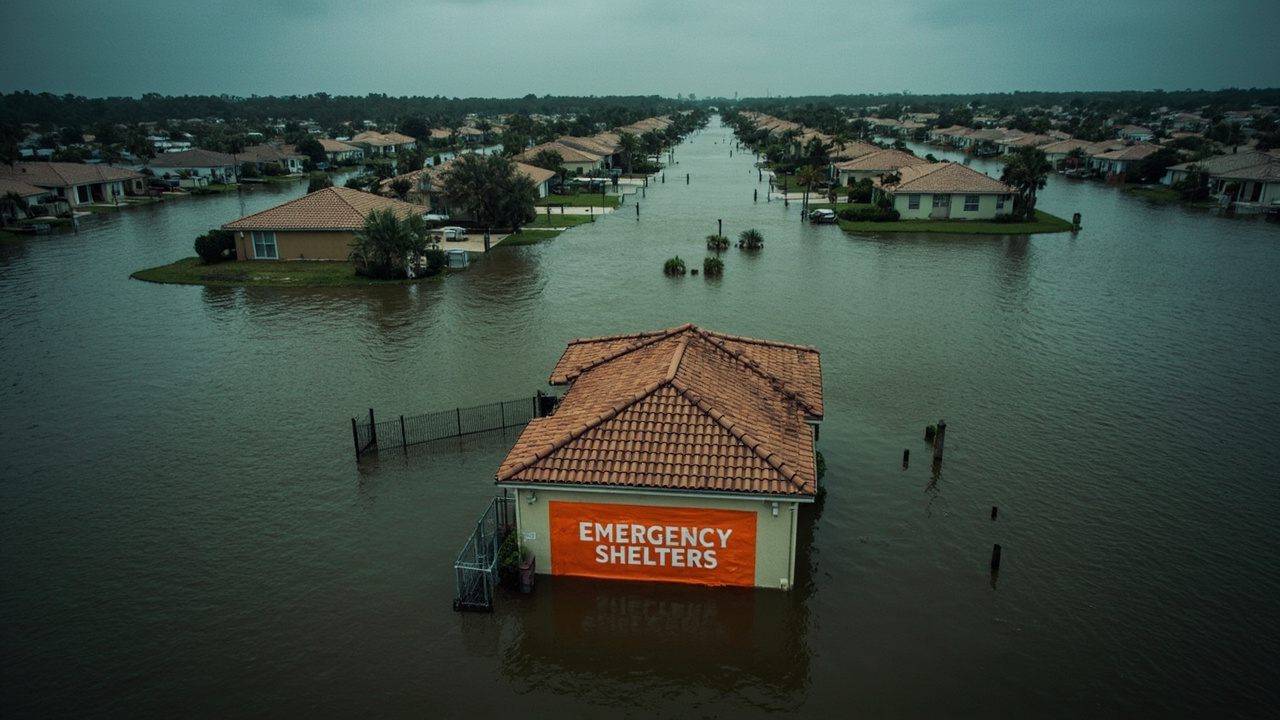
As of November 5, 2026, Port St. Lucie continues to face significant flooding consequences following an unprecedented deluge, prompting local emergency management to activate temporary shelters for displaced residents. Currently, the general population shelter at the Havert L. Fenn Center in Fort Pierce is open, while the special needs shelter has closed [1].
The Activation of Shelters
On November 3, the St. Lucie County Emergency Management announced the opening of temporary shelters in response to destructive flooding that affected numerous residents. A general population shelter was initially established at Northport K-8 School, located at 250 N.W. Floresta Drive, Port St. Lucie, FL 34983. It opened at 11 a.m. that day, followed shortly by the activation of a special medical needs shelter at the Havert L. Fenn Center, which commenced operations at 1 p.m. [2][3].
Items recommended for displaced residents included essential personal items such as pillows, blankets, three-day supplies of non-perishable food, one gallon of water per person per day, and any necessary medical equipment [4].
Update on Shelter Status
By November 4, the situation evolved as the general population shelter was relocated from Northport K-8 to the Havert L. Fenn Center [5]. As of the latest update, the general population shelter continued to accommodate residents while the special medical needs shelter had ceased operations after all residents had departed [1].
As reports indicated, approximately 16 individuals utilized the general population shelter as of early November 4, with five relying on special medical support [6]. The comprehensive response aims to ensure that those displaced by flooding receive adequate care and support during this critical time.
Flooding Impacts and Recovery Efforts
The extraordinary flooding was triggered by a significant weather event that led to rainfall totals estimated between 12 to 16 inches across various locations in St. Lucie County, with some areas facing even higher totals [7]. This resulted in a substantial emergency response, with local officials reporting around 120 water rescues [8].
Efforts are in place to monitor and assist residents, with the Port St. Lucie police department actively checking on flooded neighborhoods and roads. Emergency response crews have been working alongside community organizations to aid in recovery efforts and restore normalcy in flooded areas, which still have standing water as of November 4 [5][6].
Safety and Community Support
Authorities urge residents to exercise caution while navigating flooded roads, stressing the importance of avoiding barricaded or closed roadways. Community members are encouraged to check on their neighbors and support one another during the recovery process [7].
Health officials from the Florida Department of Health have also issued warnings regarding potential hazards associated with floodwater, advising residents to avoid contact, especially if they have open wounds, and to utilize bottled water or boil their tap water before consumption [8].
Future Considerations
As the water levels are projected to take several days to recede completely, officials are actively addressing immediate needs and assessing infrastructure and road conditions for safe access and travel [6][7]. The Emergency Operations Center in St. Lucie County remains at a partial Level 2 activation status, reflecting the sustained effort needed to manage the ongoing situation and facilitate relief to affected residents [8].
For continuous updates on the conditions in St. Lucie County and specific information regarding ongoing evacuation and shelter operations, residents are encouraged to consult St. Lucie County Emergency Readiness Portal.
Key Takeaways
- Shelters Open: The Havert L. Fenn Center remains open as a general population shelter; the special medical needs shelter has closed.
- Turnout: As of November 4, 16 residents were housed in the general population shelter.
- Flooding Damage: Record rainfall has resulted in extensive flooding, necessitating a large-scale emergency response.
- Caution Advised: Residents advised to avoid flooded areas and adhere to safety protocols.
- Health Risks: Residents warned about potential contamination health risks from floodwater.
FAQ
What should residents bring to the shelter?
Residents are encouraged to bring pillows, blankets, a three-day supply of non-perishable food, water, medications, medical equipment, hygiene articles, and personal identification items.
Why was the shelter relocated?
The general population shelter was relocated to permit the reopening of St. Lucie Public Schools, which were affected by the flooding [6].
How many rescues have been reported?
Approximately 120 water rescues and related emergency responses have been conducted by local authorities following the flooding [7].
What resources are available for ongoing updates?
Residents can get the latest information and updates on shelter status and flood conditions from the St. Lucie County Emergency Readiness Portal [8].
Sources referenced
- St. Lucie County Relocates Temporary Shelters | City of Port St. Lucie, FL (https://www.cityofpsl.com/News-Stories/2026/St.-Lucie-County-Relocates-Temporary-Shelters)
- SLC Opens Shelters to Address Residents Impacted by Flood | City of Port St. Lucie, FL (https://www.cityofpsl.com/News-Stories/2026/SLC-Opens-Shelters-to-Address-Residents-Impacted-by-Flood)