Louisiana's Governor Issued a Clear Warning: Harvey Was Not Over
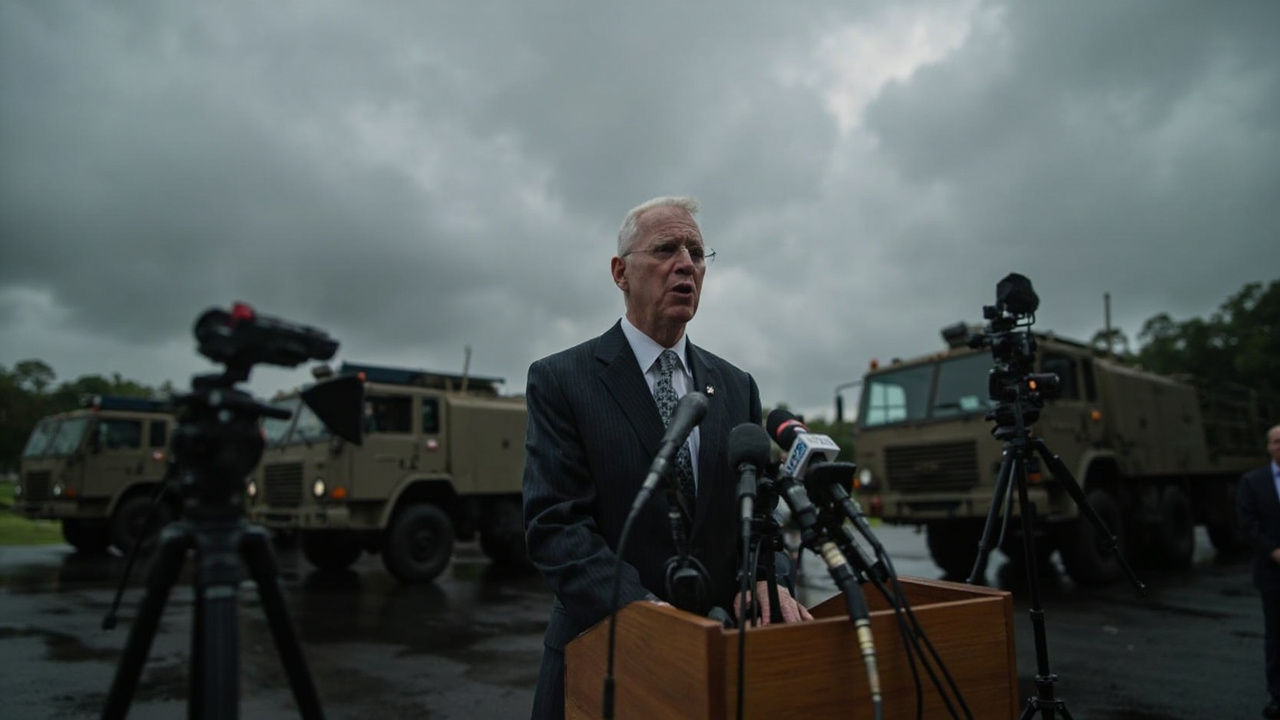
Governor John Bel Edwards told Louisiana residents in no uncertain terms that Hurricane Harvey remained a serious and life-threatening storm, even as national media attention began shifting elsewhere. Edwards made his public warning to emphasize that the danger had not passed and that residents should continue following emergency instructions from local officials.
According to reporting by WAFB News, Edwards addressed the public as Harvey continued to dump heavy rainfall across portions of Louisiana following its devastating run through Texas. The governor's message was direct: residents should not assume the worst had passed simply because the storm had weakened or moved. Flooding from sustained rainfall represented a continuing hazard that emergency managers were actively monitoring.
Edwards declared a state of emergency ahead of Harvey's impact on Louisiana, activating resources and positioning the National Guard to assist with potential evacuations and rescues. That pre-storm declaration was designed to speed up access to federal assistance and to streamline the deployment of state resources to affected parishes.
What Harvey Did Before Reaching Louisiana
Harvey made landfall along the Texas Gulf Coast as a Category 4 hurricane before stalling and producing what meteorologists described as historic rainfall totals over the Houston metropolitan area. The storm's unusual behavior — moving inland, stalling, and then drifting back toward the Gulf before turning northeast — meant that Louisiana faced a rainfall threat rather than a direct wind strike.
The slow-moving nature of the system was what made it so destructive. By remaining nearly stationary over the same regions for days, Harvey was able to drop rainfall measured in feet rather than inches across parts of Texas. As the storm's remnants pushed into southwestern Louisiana, state emergency officials warned that even comparatively modest rainfall totals on already saturated ground could trigger significant flooding.
According to WAFB, Edwards specifically pointed to the ongoing nature of the flooding threat as the reason residents needed to remain alert. The governor urged people not to drive through flooded roadways, a leading cause of storm-related deaths during flood events.
Emergency Declaration and Resource Deployment
Edwards activated Louisiana's emergency management infrastructure well before Harvey's rainfall reached the state line. The pre-positioning of National Guard troops and equipment was a deliberate move to shorten response times if parishes required water rescues or shelter operations.
The Louisiana Governor's Office of Homeland Security and Emergency Preparedness, known as GOHSEP, coordinated with parish-level emergency managers to identify communities at highest risk and to stage resources accordingly. High-water vehicles, boats, and rescue teams were placed in areas that flood modeling suggested would be most affected.
Shelters were also opened across southern Louisiana parishes ahead of the storm's arrival. Edwards encouraged residents in low-lying areas and those living in mobile homes or manufactured housing to take advantage of those facilities rather than wait to see how much rain actually fell.
The Danger of Complacency During Prolonged Storm Events
One of the core messages in Edwards' public statements was a warning against complacency. Major storm events that unfold over multiple days — as Harvey did — tend to generate a pattern in which public attention and vigilance drop off even as physical dangers remain elevated.
By the time Harvey's rainfall was affecting Louisiana, Texas flood rescues were still ongoing and the full scope of that disaster was still being measured. Edwards used that backdrop to reinforce that Louisiana residents needed to treat their own situation with the same seriousness, regardless of where most of the news coverage was focused.
As reported by WAFB News, Edwards emphasized the importance of monitoring updates from local emergency managers and from the National Weather Service. He urged residents not to rely on a single update or to assume conditions were stable simply because rainfall had paused momentarily.
Flood Safety Instructions for Residents
Edwards' guidance during the Harvey event aligned with standard emergency management protocols for flood events. Among the instructions communicated to the public:
- Do not drive into flooded roads or low-water crossings under any circumstances.
- Monitor local emergency management social media and official alert systems for real-time updates.
- If ordered to evacuate, leave immediately and do not wait for flooding to arrive.
- Residents in flood-prone areas should move to higher ground proactively rather than reactively.
- Keep a go-bag with essential documents, medications, and supplies ready for rapid departure.
These instructions were consistent with the emergency messaging Louisiana officials had refined after the state's devastating August 2016 flood, which killed thirteen people and damaged more than 100,000 homes across a wide swath of southern Louisiana without any formal hurricane warning having been issued.
Louisiana's Flood History and Ongoing Preparedness Challenges
Louisiana's repeated experiences with catastrophic flooding — from Hurricane Katrina in 2005 to the 2016 flood event — had shaped a state emergency management culture that prioritized early action and aggressive public communication. Edwards inherited and built upon that institutional memory.
The governor's decision to issue warnings about Harvey even when the storm's direct impact on Louisiana appeared less severe than what Texas experienced reflected that institutional commitment. Emergency planners and public officials had repeatedly identified the period between initial impact and final clearance as the window in which complacency costs lives.
According to WAFB News coverage, Edwards also called on the federal government to ensure Louisiana would have access to disaster assistance resources if the flooding proved severe enough to warrant a federal disaster declaration. That request was consistent with the state's established approach of engaging federal partners early so that aid pipelines could open quickly.
Key Guidance From the Governor's Warning
Edwards' sustained public messaging during Harvey's impact on Louisiana offered a model of emergency communication: stay specific, stay factual, repeat the most important safety instructions, and do not allow the news cycle to signal an all-clear that official conditions have not yet warranted. Residents were told clearly that the storm was not over, the flooding threat remained active, and official guidance should govern their decisions — not social media speculation or the assumption that the worst had already occurred elsewhere.
Sources referenced
- WAFB News: Gov. Edwards advises residents to continue taking Harvey seriously (https://www.wafb.com/story/36219287/gov-edwards-advises-residents-to-continue-taking-harvey-seriously)
- Louisiana Governor's Office of Homeland Security and Emergency Preparedness (GOHSEP) (https://gohsep.la.gov)