TL;DR: On Sept. 21, 2026, Gov. Gavin Newsom proclaimed a statewide state of emergency to accelerate El Niño preparation before winter storms intensify.
SACRAMENTO — California moved into early emergency footing for winter on Sept. 21, 2026, when Governor Gavin Newsom proclaimed a statewide state of emergency tied to a developing El Niño that forecasters warned could become historic. According to the Governor of California announcement, the proclamation mobilizes state resources, streamlines procurement, and directs agencies to protect vulnerable communities, prepare roads and critical infrastructure, stage supplies, and help local partners reduce flood, landslide, and coastal risks before severe weather intensifies.
The timing is deliberately pre-storm. State leaders said they did not want to wait until atmospheric rivers, coastal flooding, power outages, or evacuations were already underway. According to the Cal OES News account of the same declaration, the emerging El Niño event was already breaking records and was expected to continue strengthening, potentially becoming the strongest in recorded history.
Why California declared early
The forecast behind the declaration was unusually blunt. According to the Governor of California announcement, federal forecasters put the chance of a very strong El Niño this fall and winter at greater than 90%, with a 75% chance it could reach historic strength.
El Niño is described by the state as a natural climate pattern marked by warmer-than-average ocean temperatures in the tropical eastern Pacific, capable of shifting weather patterns and bringing wetter, more intense winters to California. State officials added that climate change can intensify that pattern. A study published in the journal Science last month found El Niño events are now more than 36% stronger than before the industrial era, with the trend accelerating over the last 40 years as the planet warms, according to the Governor of California announcement.
Newsom framed the emergency as confidence-building rather than alarm.
“California is strongest when we look out for one another. That is what this action is about.”
He added that early preparation was intended to give communities support, give first responders tools, and give families confidence the state is ready, with every Californian safe at home, connected to community, and protected when severe weather arrives.
What the statewide order mobilizes
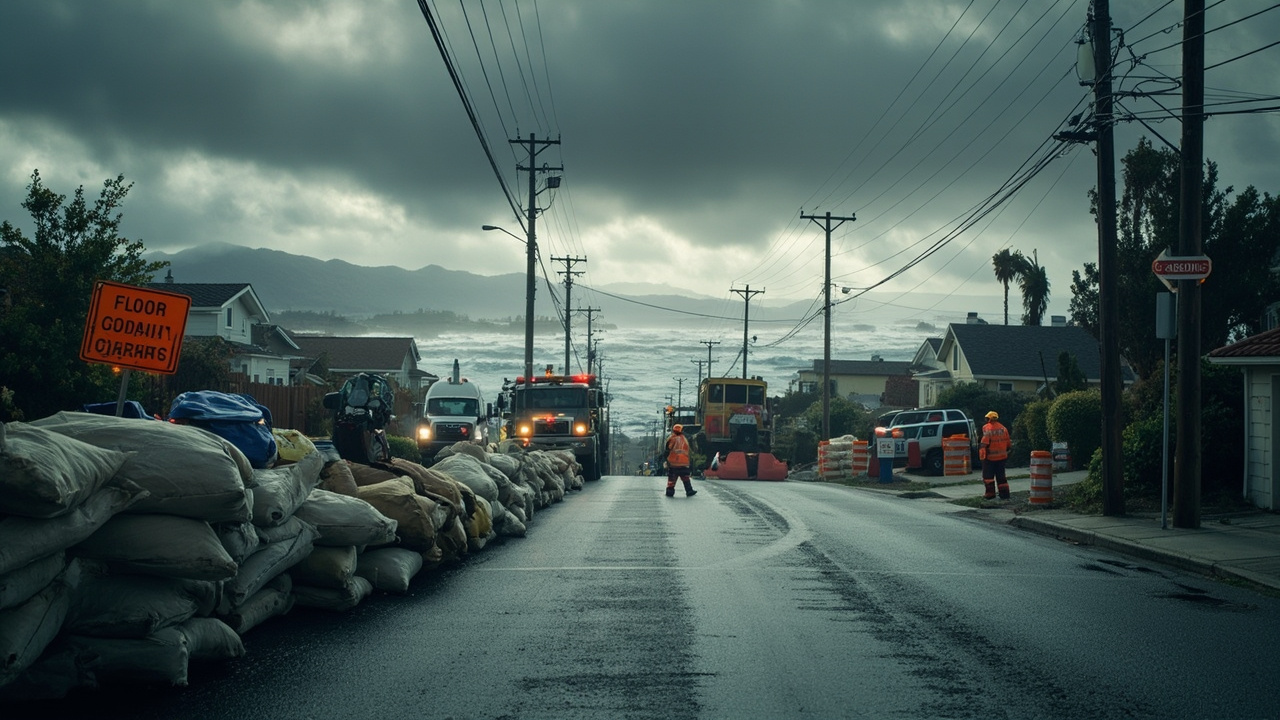
The proclamation orders state agencies to lead flood-risk-reduction work, stage flood-fighting supplies such as sandbags and pumps, and pre-position other critical equipment. According to UPI reporting on the Sept. 21 declaration, it also allows agencies to begin planning early for roads and other infrastructure, emergency supplies, and measures to reduce flooding and landslide risks.
Transportation readiness is a major piece. The California Department of Transportation will stage traffic-control, road-closure, and snow-removal equipment along highways judged most at risk. That pre-staging matters for mountain passes, burn-scar corridors, low-lying roadways, and routes where a single closure can isolate neighborhoods or delay emergency response.
The California National Guard is placed in a prepare-to-support posture for flood response, search-and-rescue, engineering, and logistics missions when needed. State environmental and natural resources agencies are directed to support local work on flooding, landslides, and debris flows by fast-tracking permitting and identifying other ways to cut red tape.
The Governor’s Office of Emergency Services, in consultation with relevant state agencies, is also directed to expand accessible, multilingual public preparedness communications covering severe weather, flooding, emergency alerts, evacuation readiness, power outages, and related hazards.
Cal OES Director Caroline Thomas Jacobs said the office is leading statewide efforts by bringing state and local partners together, conducting advance planning, and identifying potential needs before impacts occur. According to the Cal OES News release, she said early coordination is intended to ensure communities and first responders have personnel, equipment, and support to prepare for severe weather, respond quickly when conditions change, and protect lives and property.
California Natural Resources Secretary Wade Crowfoot said the state is acting now because of the seriousness of climate-driven weather extremes. According to the Governor of California announcement, he said the emergency allows the state to cut red tape, fast-track flood-protection and broader preparedness work, and mobilize with partners to safeguard people, infrastructure, and natural resources before the worst storms arrive.
What El Niño could bring to neighborhoods
State officials warned that fall and winter could be dangerous and urged residents to take the outlook seriously. The Pacific is unusually warm, a condition that can shift storm tracks and load the atmosphere with more energy over the months ahead.
For California, officials listed repeated rounds of heavy rain, strong winds, mountain snow, flooding, landslides, debris flows, large waves, and coastal flooding, especially when storms coincide with very high tides. For households, that translates into practical disruptions: roads closed by flooding or rockslides, power outages, neighborhoods cut off, damage to homes and businesses, and fast-changing conditions that leave little time to react.
The proclamation noted that California has experienced increasingly severe and destructive storms with widespread flooding, landslides, power outages, and other events over the past few years, and that climate change has intensified weather extremes, according to UPI.
State guidance for residents and homeowners emphasized four immediate steps: know flood risk, clear drains and gutters, sign up for emergency alerts, and make a household plan before severe weather arrives.
For emergency planning, that means treating flood awareness as place-specific. A home does not need to sit beside a river to flood. Storm-drain backup, hillside runoff, saturated slopes above a neighborhood, coastal high-tide flooding, and post-fire debris flows can all create risk away from mapped floodplains. Households should identify how water moves around their property, where local alerts originate, how evacuation notices are worded, and what route they would use if the primary road closes.
Water agencies, groundwater recharge, and local coordination
The emergency declaration also carries a water-system dimension. According to the Association of California Water Agencies, the proclamation initiates measures to protect communities and infrastructure now in preparation for potentially heavy flooding this winter, including staging flood-protection materials, advancing groundwater recharge projects, and enhancing coordination between state, federal, and local governments.
ACWA Executive Director Karla Nemeth said the action reflects leadership to advance resilience to volatile climate extremes. According to the Association of California Water Agencies report, she said giving local water agencies the ability to act now will help them prepare and safeguard communities, agricultural resources, and public infrastructure from potentially catastrophic flooding.
That linkage matters for readiness planning because winter floodwater can be both hazard and supply. If recharge basins, conveyance, flood bypasses, and local coordination are prepared early, high flows can be managed with less damage while capturing water where systems allow. If preparation lags, the same flows threaten levees, roads, farms, treatment systems, and neighborhoods.
Cities react: San Diego says work is already underway
Local response began the same day. According to the City of San Diego Official Website statement, Mayor Todd Gloria said the governor’s declaration underscores the seriousness of potential El Niño conditions and the importance of preparing now.
Gloria said San Diego city departments were already working together to prepare for potential flooding, coastal impacts, infrastructure challenges, and other severe weather. He said the governor’s action will help strengthen that work by making additional state resources available and helping communities move more quickly on preparedness efforts, while pledging continued coordination with state, regional, and local partners.
The city-level message reinforces the state’s “prepare before the first major storm” theme. Municipal fleets, storm channels, pump stations, coastal access points, homeless outreach, utility coordination, and public messaging all require lead time. Emergency declarations can shorten contracting, purchasing, mutual-aid, and permitting timelines that otherwise slow that work.
Separate recovery orders for past storms
Alongside El Niño readiness, Newsom also proclaimed states of emergency to support recovery from three earlier severe-weather events that caused significant damage in Glenn, Humboldt, Kern, Mendocino, and Santa Barbara counties, according to the Cal OES News release.
Those recovery orders are distinct from the forward-looking El Niño mobilization, but they illustrate the planning challenge California faces: repairing past storm damage while simultaneously hardening infrastructure for the next season. For county emergency managers, that dual track means documenting damage, seeking reimbursement, restoring roads and water systems, clearing debris basins, and updating evacuation and shelter plans at the same time.
How households should use this lead time
State officials urged Californians not to treat the emergency proclamation as a signal to wait. The declaration creates state speed; household readiness still depends on local decisions made in calm weather.
A practical pre-winter checklist drawn directly from state guidance starts with information: learn local flood risk, enroll in county and city alert systems, understand the difference between watches, warnings, advisories, and evacuation orders, and keep a battery-powered way to receive alerts during outages. Next is property maintenance: clear drains and gutters, secure outdoor items that can block water or become projectiles, inspect roofs and slope drainage, and know where sandbags are distributed locally if officials make them available.
Then comes continuity: build an evacuation plan with two routes, a meeting place, medications, documents, pet supplies, chargers, and backup power or lighting. Plan for power outages that may affect medical devices, refrigeration, heating, well pumps, garage doors, and home communications. Finally, coastal and hillside residents should pay special attention to tide timing, wave forecasts, burn-scar warnings, and local road-closure information, because El Niño impacts can arrive as combined rain, wind, surf, and tide events rather than a single hazard.
The state’s multilingual communications expansion is especially relevant for renters, older adults, people with disabilities, farmworkers, unhoused residents, and households that rely on languages other than English for emergency instructions. Community organizations, schools, employers, and faith groups can amplify official messages by sharing alert sign-up links, evacuation maps, shelter information, and outage resources before roads close or power fails.