TL;DR: North Carolina officials used September 2026 National Preparedness Month to urge every household to refresh its emergency plan and stock three to five days of supplies.
North Carolina Leaders Urge Families to Refresh Plans and Kits for Preparedness Month
September is National Preparedness Month, and Governor Josh Stein and emergency management officials are urging North Carolinians to prepare by updating their emergency plans and supply kits, according to the September Is National Preparedness Month in North Carolina | NC Governor.
The message, highlighted in Iredell County on Sept. 7, 2026, was direct: do not wait for the next storm to get ready. In a statement carried by Emergency management officials urge North Carolinians to update emergency plans, supply kits | Iredell Free News, Stein said, "We can't predict the next weather event, but we can prepare for it." He added that personal preparedness makes response and recovery possible and urged residents to start building a kit and making a family plan that day.
National Preparedness Month, sponsored by the Federal Emergency Management Agency (FEMA), encourages all Americans to prepare for various types of emergencies, according to the NC Governor announcement. In North Carolina, officials pointed families to ReadyNC.gov for traffic, power outage, and shelter information and to @NCEmergency on Twitter and Facebook for daily preparedness tips throughout September.
Why officials say preparation cannot wait
North Carolina faces severe thunderstorms, damaging winds, hail, tornadoes, hurricanes, wildfires, and increasingly, unprecedented heat, according to Governor Stein's September Column: Preparedness Starts Before Disaster Strikes | NC Governor.
That column notes that coastal communities keep alerts on to learn which nearby roads have flooded, that flash flooding soaks rush-hour commutes across the state, and that seasonal storms keep arriving while families across western North Carolina continue recovering from Hurricane Helene, which hit hard in September 2024.
The preparedness appeal frames readiness as a shared responsibility that begins with families, neighborhoods, and communities taking simple steps before an emergency, the column states. Officials stress that people cannot predict exactly what the next disaster will be or when it will strike, but households can decide how ready they will be when it happens.
Turn on alerts and know where to get reliable information
The first household action is to turn on the alert function on cellphones to receive wireless emergency alerts, according to the NC Governor announcement.
Many county emergency management agencies also offer local emergency alert services, described as easy to sign up for and useful for awareness of approaching danger such as flash flooding. The From flood risks to evacuation zones: How N.C. officials say you should prepare report summarized the same guidance: enable wireless alerts on mobile devices and enroll in county-level notification systems.
For ongoing situational awareness, North Carolina Emergency Management provides preparedness resources through a ReadyNC mobile app and website, including information in English, Spanish, and American Sign Language, the September column states. ReadyNC.gov offers information on traffic, power outages, and shelters, according to the NC Governor announcement.
Understand flood risk before water rises
One of the largest contributors to the loss of life and property in the state is flooding, the NC Governor announcement states.
To understand personal risk, residents can visit the NC Flood Inundation Mapping and Alert Network, known as FIMAN, where current and forecast water levels are available from hundreds of streams and coastal locations across the state. Residents can also use North Carolina's Flood Information Center. By entering a specific address, a user can find the property's flood hazard risk, possible structural impacts, potential insurance rates, mitigation opportunities, and the locations of flood warning sites nearby.
Preparedness Month coverage emphasized the same tools as practical pre-storm homework rather than during-storm research. Check a specific property, note nearby warning sites, and review forecast water-level information before travel or evacuation decisions become urgent.
Know coastal evacuation zones in advance
North Carolina's Know Your Zone initiative helps residents understand evacuation procedures in coastal areas vulnerable to hurricanes and other hazards, according to the NC Governor announcement.
Coastal residents can learn their evacuation zone and how to prepare by visiting KnowYourZone.nc.gov. Officials presented the lookup as a core part of hurricane-season readiness: know the zone, understand the procedure, and include that route in the household plan.
Build a kit for three to five days
The time to put an emergency kit together is well before a storm is coming, the September column states, noting that grocery shelves go bare when a major storm approaches and that planning ahead avoids last-minute competition for supplies.
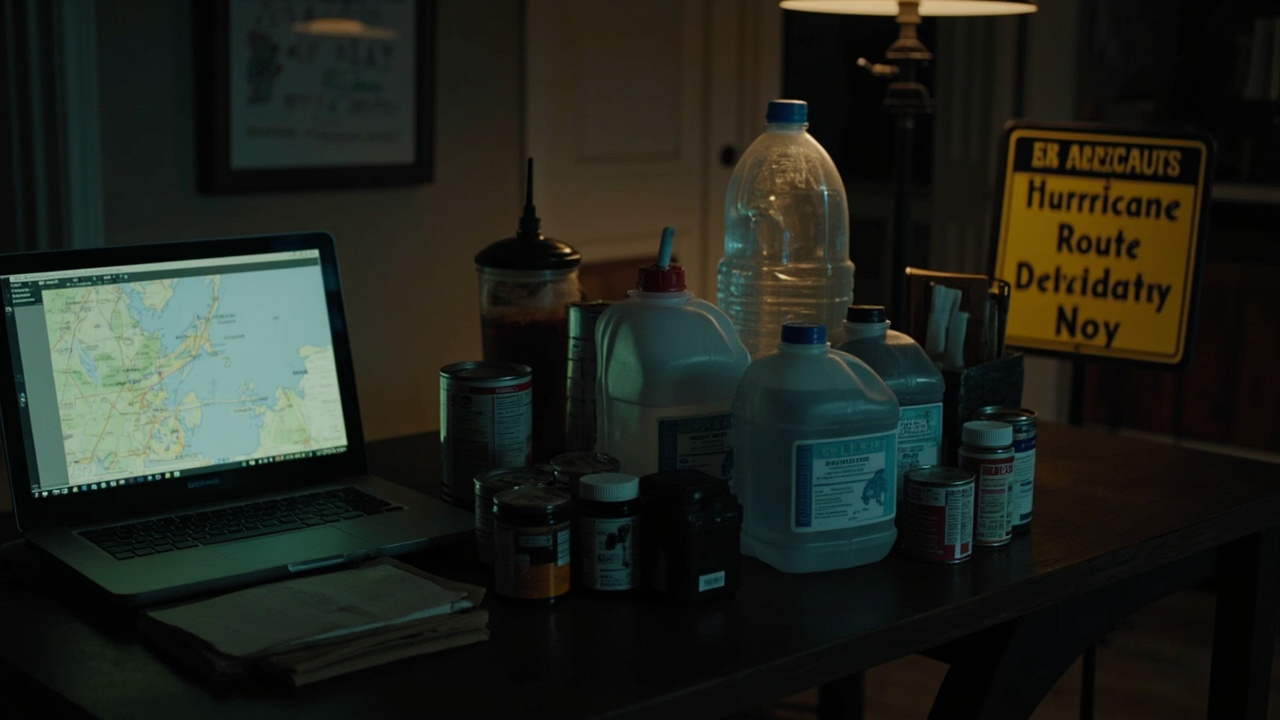
Every household should aim to have enough supplies for three to five days. The recommended kit includes water and nonperishable food, medications, baby food, and other necessities a family may need. A solar- or battery-powered radio can help residents stay informed if power goes out.
Households should also create an emergency document kit, keeping important financial documents, identification, and emergency contacts together where the kit is easy to grab if evacuation is required.
Make a family communication and evacuation plan
Every family should know what to do if disaster strikes, the September column states. That conversation should cover an evacuation plan: how household members will get to safety, where they will meet if separated, and how they will stay in touch.
The column cautions against assuming a cellphone will always be available. If family phone numbers are not memorized, residents should consider printing them and keeping the list with emergency documents so contact remains possible if a phone battery runs out.
A complete plan should account for people who may need additional assistance, including older adults and people who cannot help themselves. It should also include supplies and transportation for pets or livestock, whose safety should be part of the emergency plan.
Protect your home and document what you own
A little preparation at home can make a real difference, according to the September column. Residents should know how to shut off utilities, including electricity, gas, and water, if necessary.
Households should also make a list of important personal belongings and photograph them. A record of possessions can be invaluable if property is damaged or destroyed and an insurance claim must be filed.
On insurance, the NC Governor announcement warns that flooding is also one of the most difficult disasters to recover from and that most insurance policies do not fully cover flood damages, making recovery longer and more challenging. Officials identify a flood insurance policy through the National Flood Insurance Program, or NFIP, as one of the best ways to protect property. NFIP provides flood insurance to property owners, renters, and businesses.
Help neighbors and join community response efforts
"The State Emergency Response Team works together to plan and train with an all-hazards approach in mind," said North Carolina Emergency Management Director Will Ray, as quoted in the Iredell Free News article. He added that everyone plays a role, whether volunteering with a local nonprofit or community-based group such as a Community Emergency Response Team, or checking on neighbors and family, especially more vulnerable residents such as the elderly or those with additional support needs.
"Responding to an emergency really takes a whole-of-community approach. It's all of us working together to help one another through difficult times," Ray said.
There are Community Emergency Response Team, or CERT, programs throughout the state that play crucial roles in community resilience, providing support in disaster aftermath and contributing to preparedness and response efforts, according to the NC Governor announcement. The teams are volunteer-based, provide training, and offer an entry point for residents looking to serve.
Residents can also visit Volunteer NC and the North Carolina Voluntary Organizations Active in Disaster to find ways to help, the announcement states. The September column adds that readiness helps neighbors as well as the household: when more people are ready, first responders can focus on those who need help most, and actions such as checking on a neighbor, helping an older relative make a plan, or sharing reliable information improve safety through the storm.