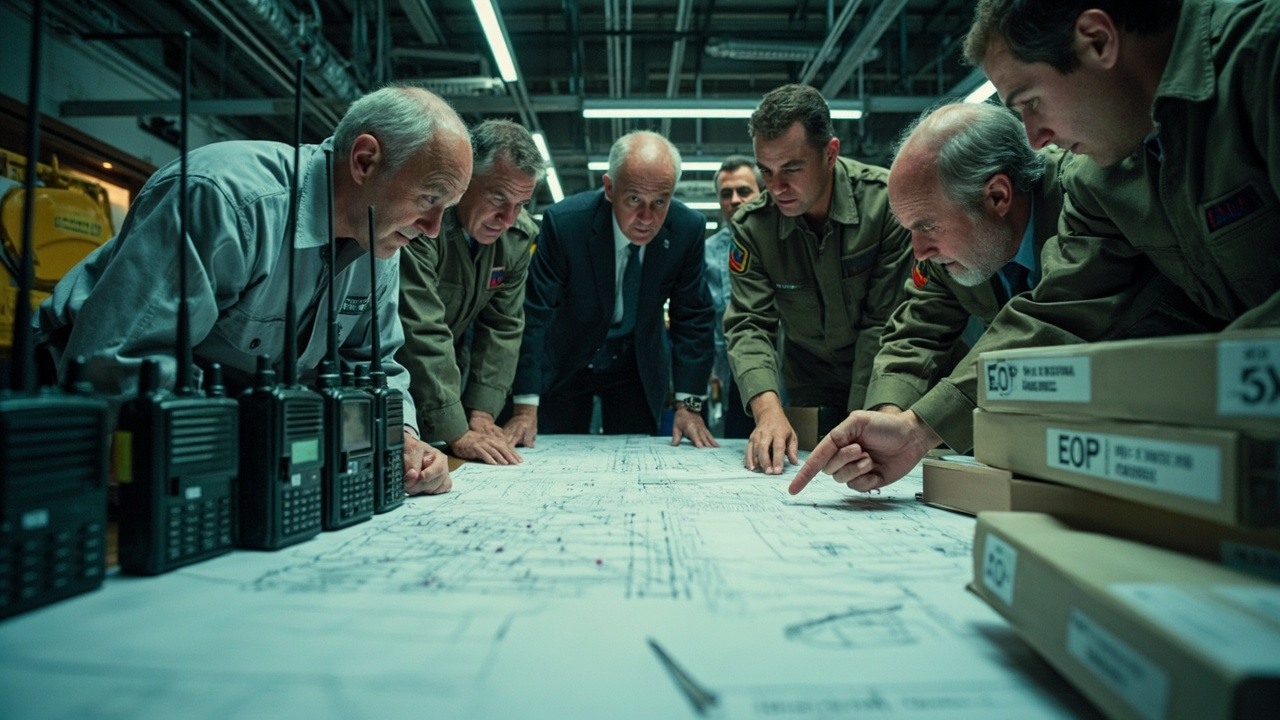
TL;DR: FEMA's May 2025 CPG 101 Version 3.1 is the current federal guide for building flexible, community-based emergency operations plans.
On May 21, 2025, the Federal Emergency Management Agency published a revised Developing and Maintaining Emergency Operations Plans Comprehensive Preparedness Guide, identified as CPG 101 Version 3.1, according to the Emergency Management Association of Texas report titled FEMA publishes revised Developing and Maintaining Emergency Operations Plans Comprehensive Preparedness Guide. That report states that Version 3.1 supersedes CPG 101 Version 2.0, published in September 2021, which is rescinded. The underlying federal document, titled Developing and Maintaining Emergency Operations Plans Comprehensive Preparedness Guide, describes itself as guidance on fundamentals of planning and developing emergency operations plans, including steps to produce a plan, possible structures, and components of a base plan and its annexes.
For local planners, households, businesses, faith-based groups, and nonprofit partners, the message is direct: use a collaborative, risk-informed process that reflects the actual population, documents roles and responsibilities, and stays adaptable during real events. According to the Federal Emergency Management Agency guide, the planning process and resulting relationships are just as important as the resulting document, plans are not scripts to be followed to the letter but are flexible and adaptable to the actual situation, and effective plans convey goals, objectives, and actions needed to achieve them.
What CPG 101 Version 3.1 Is and Who It Serves
Federal foundation for state, local, tribal, and territorial planning
CPG 101 provides the foundation for state, local, Indian Tribal Nation, territorial, and insular area emergency planning in the United States, according to the Federal Emergency Management Agency guide. That guide notes that planners in other disciplines, organizations, and the private sector, as well as all levels of government, may find it useful in developing emergency operations plans.
The guide defines the private and nonprofit sector to include nongovernmental enterprises and organizations, such as businesses, faith-based organizations, constituent advocacy organizations, and nongovernmental organizations that support disaster response and recovery. Version 3.1 emphasizes including those sectors in planning activities, according to the Federal Emergency Management Agency guide.
Per the Stafford Act discussion in the guide, insular areas include Guam, the Commonwealth of the Northern Mariana Islands, American Samoa, and the U.S. Virgin Islands. The guide adds that other statutes or departments and agencies may define insular area differently.
What changed from prior versions
The updated content in CPG 101 Version 3.1 is based on practitioner feedback, identified lessons learned, and successful practices from real-world events and exercises that can inform the planning process, according to the Federal Emergency Management Agency guide and the Emergency Management Association of Texas report.
The Summary of Changes document titled Comprehensive Preparedness Guide 101: Developing and Maintaining Emergency Operations Plans states that Version 3 updates Version 2 to align with current policies, programs, and doctrine. It lists the National Response Framework, Fourth Edition (2020); the National Preparedness System and National Preparedness Goal, Second Edition (2015); the National Incident Management System, Third Edition (2017); the Threat and Hazard Identification and Risk Assessment and Stakeholder Preparedness Review — Comprehensive Preparedness Guide 201, Third Edition (2018); and the Homeland Security Exercise and Evaluation Program guide (2020). That summary also says the revision incorporates lessons learned from the whole community in response to incidents since publication of CPG 101 V2 in 2010.
How EOPs Connect to the National Preparedness System
Five mission areas and 32 capabilities
CPG 101 shows how emergency operations plans connect to planning efforts in all five mission areas, according to the Federal Emergency Management Agency guide. Presidential Policy Directive 8 identifies the five mission areas as prevention, protection, mitigation, response, and recovery.
The Summary of Changes document states that CPG 101 V3 addresses the National Preparedness Goal, describing the five mission areas and 32 core capabilities necessary to manage risk and enhance security and resilience. For readiness planning, that link matters because a local emergency operations plan is not isolated; it supports capability development across the lifecycle of a potential crisis.
Lifelines, ESF #14, and private-sector commodities
The Summary of Changes document states that CPG 101 V3 includes information from the National Response Framework, including community lifelines and federal Emergency Support Function #14 Cross-sector Business and Infrastructure. Community lifelines enable continuous operation of important government and business functions essential to human health and safety or economic security, and planners can use community lifelines to improve emergency operations planning.
In factoring ESF #14 into the guidance, the planning guidance emphasizes integrating the private sector into emergency planning, recognizing the essential role the private sector plays in providing commodities such as food and fuel and critical services such as power, transportation, communications, and healthcare, according to that Summary of Changes document. The Federal Emergency Management Agency guide separately lists methods for planners to integrate and coordinate efforts across all levels of government, the private sector, and nonprofit organizations.
Planning Guides and related resources
FEMA's resource page titled Planning Guides describes planning as a methodical way to engage the whole community in thinking through the lifecycle of a potential crisis, determining required capabilities, and establishing a framework for roles and responsibilities. That page states that a shared planning community increases likelihood of integration and synchronization, makes planning cycles more efficient and effective, and makes plan maintenance easier.
The same Planning Guides page lists CPG 101 as providing guidelines on developing emergency operations plans and promoting common understanding of community-based, risk-informed planning and decision making to help planners examine threats or hazards and produce integrated, coordinated, and synchronized plans. It also lists CPG 201 for Threat and Hazard Identification and Risk Assessment and Stakeholder Preparedness Review, and CPG 502 for fusion center and emergency operations center coordination. Questions can be directed to the National Integration Center at [email protected], according to that page.
Choosing the Right Plan Structure
Function-focused and agency-focused formats
The Federal Emergency Management Agency guide includes a chapter titled Identifying the Right Plan for the Job and sections on structuring an emergency operations plan, including function-focused format and agency- or department-focused format. The Summary of Changes document states that CPG 101 V3 includes expanded guidance on emergency operations plan structures, concepts, and how plans can be supplemented with annexes that provide details on specific emergency response functions, such as emergency sheltering and search and rescue, and threats and hazards, such as earthquakes, hazardous materials spills, and power failures.
Other FEMA guides provide detailed information about planning considerations for specific functions, hazards, and threats, according to the Federal Emergency Management Agency guide. For more information, that guide points readers to FEMA's Planning Guides resource page at https://www.fema.gov/emergency-managers/national-preparedness/plan.
Additional plans that support the EOP
Emergency preparedness and emergency operations involve several different kinds of plans based on different planning processes, according to the Summary of Changes document. That document states that CPG 101 V3 describes how various plans, such as hazard mitigation plans, continuity of operations and continuity of government plans, and pre-incident recovery plans, relate to emergency operations plans.
The Planning Guides page also identifies Distribution Management Plans as enabling state, local, tribal, and territorial partners to strengthen capabilities before a disaster to enhance capacities to distribute resources to survivors after a disaster. Effective in 2019, all Emergency Management Performance Grant recipients are required to develop and maintain a Distribution Management Plan as an annex to their Emergency Operations Plan, according to that page.
The Six-Step Planning Process in Practice
Step 1: Form a collaborative team that mirrors the community
The Federal Emergency Management Agency guide organizes the planning process into six steps, beginning with forming a collaborative planning team. The guide lists as a method conducting community-based planning to engage the whole community through a process that represents the actual population and involves community leaders and the private sector.
The Summary of Changes document states that the six-step planning process has been updated to include businesses and infrastructure owners and operators, public sector partners, community-based organizations, and nonprofit sector partners. It also states that CPG 101 V3 highlights inclusiveness and introduces key concepts of accessibility. The accessibility concepts listed are self-determination, eliminating one-size-fits-all solutions, equal opportunity, inclusivity, integration, physical access, equal access, effective communication, program modifications, and at no cost to the individual.
Step 2: Understand the situation through risk analysis
The second step is understanding the situation, according to the Federal Emergency Management Agency guide chapter structure. The guide lists methods to develop plans by identifying and analyzing risk and to identify operational assumptions and resource demands.
The Summary of Changes document states that CPG 101 V3 introduces a risk-based planning process that reflects needs of the population and accounts for resources that may be required to assist individuals affected by disasters and emergencies. It names key resources such as the Resilience Analysis and Planning Tool that planners can use to inform analysis and enhance plans. To help planners understand potential risks and anticipate response and recovery requirements, the guide includes direction on using Threat and Hazard Identification and Risk Assessment and Stakeholder Preparedness Review processes to analyze threats and hazards and inventory requisite resources.
Steps 3 to 6: Goals, development, review, and maintenance
Subsequent steps cover determining goals and objectives, developing the plan, preparing and reviewing the plan, and implementing and maintaining the plan, according to the Federal Emergency Management Agency guide table of contents. The guide lists prioritizing plans and planning efforts to support transition from development to execution for any threat or hazard as one of the methods for planners.
The Summary of Changes document states that recognizing that value of a jurisdiction's plan is determined by how consistently and effectively the plan is used, CPG 101 V3 expands guidance on training and exercising the plan. The Federal Emergency Management Agency guide notes that successful operations occur when organizations know their roles, understand how they fit into the plan, and can execute the plan.
What Goes Into an EOP Base Plan
Introductory material, purpose, scope, and situation
The Federal Emergency Management Agency guide includes a chapter on creating an emergency operations plan base plan, with sections on introductory material; purpose, scope, situation overview, and planning assumptions; and concept of operations. That structure helps jurisdictions document why the plan exists, whom it covers, what conditions it addresses, and what assumptions shape assignments.
General advice supported by the guide is to keep assumptions explicit and tied to the population and hazards identified during risk analysis. The guide lists identifying operational assumptions and resource demands as a core planner method.
Concept of operations and annexes
The base plan is supplemented by annexes addressing functions or hazards, according to the Summary of Changes document description of expanded guidance. Examples cited include emergency sheltering and search and rescue for functions, and earthquakes, hazardous materials spills, and power failures for hazards and threats.
For jurisdictions seeking templates, the Federal Emergency Management Agency guide includes a section on using plan templates. The guide cautions through its research concepts that relationships built during planning matter as much as the document, and that flexibility matters more than rigid scripting.
How to Apply CPG 101 to Household and Organization Readiness
Households and small organizations can mirror the federal model at their scale by naming who decides, who communicates, and who handles critical needs, consistent with the guide's emphasis on roles, fit, and execution. The Federal Emergency Management Agency guide states that effective plans convey goals and objectives of the intended operation and actions needed to achieve them.
General advice consistent with the guide is to involve people who reflect the household, workplace, congregation, or neighborhood, including those with access needs, and to coordinate with local government, businesses, and nonprofit groups where appropriate. That approach tracks the guide's direction on community-based planning, private and nonprofit inclusion, and coordination across levels of government.
Maintain the plan by training, exercising, reviewing after real events, and updating assumptions and contacts, consistent with the expanded implementation guidance described in the Summary of Changes document. The Preparedness Toolkit entry titled E.3 Comprehensive Preparedness Guide 101 (CPG 101): Developing and Maintaining Emergency Operations Plans adds that continuous improvement activities and products can inform update efforts and help planners address gaps, resulting in more efficient and effective plans, and that recommended actions may result in addition of new stakeholders, addressing resource gaps, or modifying assumptions or objectives.