TL;DR: Makivvik has opened Amauti, a nine-unit emergency shelter in Montreal for Inuit women and children, with trauma-informed counselling and stays of up to 90 days.
Amauti is taking clients now. The report by CBC News journalist Mah Noor Mubarik, published on Nov. 15, 2026, says the shelter opened to clients late the previous month, after three years of work by Makivvik. Makivvik is the organization that represents Quebec's Inuit.
Makivvik built Amauti, owns the building and supplies its staff, according to CBC News. Federal money paid for the project, including more than $3 million from the Canada Mortgage and Housing Corporation and Indigenous Services Canada.
When did Amauti open?
CBC News describes Amauti as open and available to Inuit women and children. The shelter began taking clients in late October 2026, according to the Nov. 15 report.
Makivvik signalled the timing months in advance. A notice dated March 17, 2026 on its website, headed "Launching in Fall 2026!", described a trauma-informed, culturally safe shelter designed for Inuit women and children leaving violent homes. Construction was already underway when the notice went out, and Makivvik said more information would follow at its annual general meeting.
The notice said the project would help fill the gap vulnerable Inuit face when they need secure, stable housing during a crisis, and it promised broader supports centred on keeping residents safe, helping them heal and reconnecting them with culture and community.
Makivvik also invited Nunavimmiut to propose an Inuktitut name for the building, in honour of Nunavik and the women and children it would serve, with a deadline of March 30 at noon. The shelter now carries the name Amauti.
By the organization's annual general meeting in Salluit, held April 27 to 30, 2026, Makivvik's president reported on the selection of a name for the shelter, and the opening was still expected that fall, according to Makivvik's magazine.
What is inside Amauti?
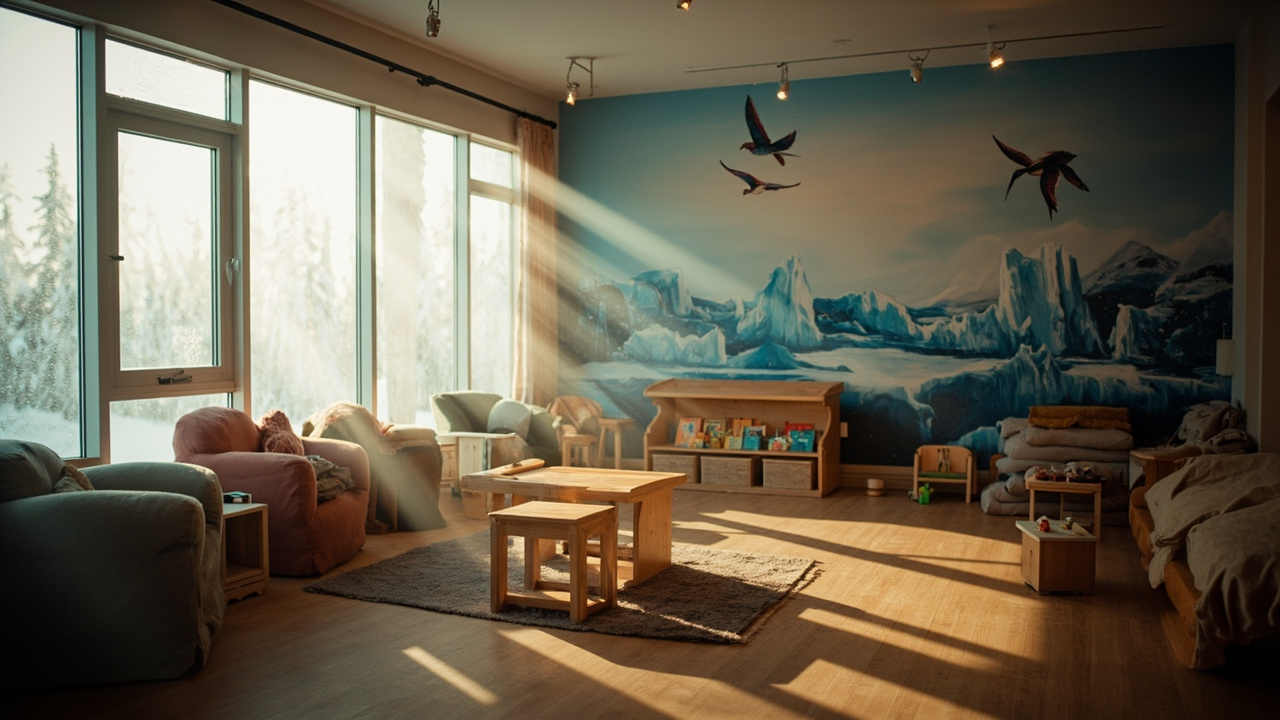
Amauti has nine units: four single rooms and five double rooms, CBC News reports. Shared areas include space for country food, rooms set up for children to play, laundry facilities and an outdoor area. Counselling is trauma informed.
Makivvik located the building in central Montreal, the area named in its March notice.
"It's very well laid out to give warmth and comfort for women," Pita Aatami, Makivvik's president, told CBC News. CBC News published a photograph of a mural inside the shelter, supplied by Makivvik.
How is the shelter staffed?
Makivvik staffs the building itself. A residential-worker posting for the Montreal shelter lists intake procedures and initial safety planning among the duties, along with monitoring safety, responding to crises, supporting children's routines and completing shift handovers. The same posting describes staff working as part of a 24/7 team and helping residents reach appointments, resources and referrals, and it lists emotional support and practical assistance for residents.
Residential staff also help coordinate meals and shared living responsibilities, according to the posting. It calls for an understanding of trauma-informed practice and the ability to stay calm in a crisis, and it is advertised as full-time or part-time work.
A separate cultural-liaison posting requires fluency in spoken Inuktitut and describes one-on-one, culturally informed support for residents and guidance for other staff on culturally safe practice. That role also covers culturally grounded programming for women and children, training for colleagues on Inuit culture and trauma, and relationships with Inuit organizations in Montreal, Nunavik and across the North.
The postings add that a new non-profit organization may be set up to oversee the shelter and future urban services, with shelter employees possibly moving into it. Both postings list a security clearance as a requirement.
Who is Amauti for?
Amauti serves Inuit women and children. Aatami explained why Montreal needed a dedicated shelter. "When these women are running away from their family members from Nunavik, most of them will go to Montreal," he told CBC News. He said Makivvik wanted a place where women leaving a spouse would have somewhere safe to go.
CBC News notes that Indigenous women are disproportionately affected by violence. Pauktuutit Inuit Women of Canada reports that Inuit women face violence at 14 times the national average. According to Statistics Canada, one in six Indigenous women has been subjected to intimate partner violence in at least one form, a figure that covers Indigenous women broadly rather than Inuit alone. Federal data shows Indigenous women, five per cent of all women in Canada, made up about 26 per cent of those killed by an intimate partner in 2022.
How does someone get a bed, and how long can they stay?
The shelter's address is not public. People looking for a bed can phone the number published on the shelter's website, according to CBC News. Stays can run as long as 90 days, with the exact length set by each resident's needs.
What it means for emergency planning
For anyone mapping crisis options in Montreal, Amauti's capacity is nine units. Because the street address is not public, a plan built around the shelter has to begin with the phone number rather than an address. Makivvik is the point of contact, so there is no drop-in option to fall back on.
After a 90-day stay, Makivvik is looking at transitional housing in Montreal that would operate alongside Amauti for women and children leaving the emergency shelter. That project is under consideration. For planning, the emergency bed and the follow-on housing are separate steps, and for a referring agency the phone call comes first while the 90-day clock sets the horizon.
Background: Makivvik and Nunavik
Makivvik describes its role as including the promotion of Inuit health, welfare, relief of poverty and education, alongside management of heritage funds under the James Bay and Northern Quebec Agreement. The Nunavik Regional Board of Health and Social Services covers nearly all Quebec territory north of the 55th parallel and serves 14 communities, according to a 2021 Makivvik press release. Makivvik lists its head office in Kuujjuaq and offices in Montreal and Quebec City.
What to watch
The next milestone is whether the transitional housing proceeds. CBC News reports no timeline or bed count for that project. Until then, the 90-day maximum is the outer edge of what the emergency shelter offers.