TL;DR: Pennsylvania American Water issued a boil water advisory on October 5, 2026 for approximately 25 customer connections in the Boggs Township Water District in Boggs Township, Centre County, after a water main break caused a loss of positive pressure.
Advisory issued for Boggs Township Water District
Pennsylvania American Water issued the boil water advisory for customers in portions of its Centre County service area on Oct. 5, 2026, according to the company's Pennsylvania American Water newsroom notice.
The company stated in that notice that it routinely monitors its distribution system. On that day, a portion of the distribution system in the Boggs Township Water District in Boggs Township, Centre County, experienced a loss of positive pressure.
The cause identified in the notice was a water main break in the Boggs Township Water District. The notice did not list a repair completion time for this Centre County break.
The notice carries Public Water System ID number 4140101 and a date issued of October 5, 2026. Media contact for the advisory was listed as Will Gelgot, Pennsylvania American Water, at 717-903-3049 and [email protected].
For household planning, the key distinction is that this is a boil water advisory tied to possible microbial contamination, not a chemical contamination order. A guide published by Why Now Daily summarizing CDC guidance explains that a boil water advisory usually means germs may be present and boiling can make water safer for drinking and food preparation.
That same CDC-summary guide explains that a do-not-drink notice can involve chemicals or toxins that boiling will not remove, while a do-not-use notice warns against contact as well as swallowing. Residents in Boggs Township were told to follow boil procedures, which confirms the microbial-risk category described in the utility notice.
Why pressure loss triggers a boil requirement
The utility notice explains that a loss of positive water pressure is a signal of conditions that could allow contamination to enter the distribution system through back-flow by back pressure or back siphonage.
Back-flow describes water moving in the opposite of the intended direction when pressure drops. Back pressure and back siphonage are the two mechanisms named in the Pennsylvania American Water notice.
Because of that pathway, state regulations require Pennsylvania American Water to issue a boil water advisory whenever conditions exist that may allow contamination. The company included that regulatory requirement in its Oct. 5 notice.
The notice states that inadequately treated water may contain disease-causing organisms. It names bacteria, viruses and parasites as the organism groups of concern.
Those organisms can cause symptoms such as nausea, cramps, diarrhea and associated headaches, according to the notice. The notice also states that these symptoms are not caused only by organisms in drinking water, but also by other factors.
The notice advises that people who experience any of these symptoms and find they persist may want to seek medical advice. It separately advises guardians of infants and young children and people at increased risk to seek advice from their health care advisors about drinking the water.
The increased-risk groups named in the notice are pregnant women, some of the elderly, and people with severely compromised immune systems. General guidelines on ways to lessen the risk of infection by microbes are available from EPA's Safe Drinking Water Hotline at 1 (800) 426 4791, according to the notice.
Who is included and how to check the map
This notice applies to approximately 25 customer connections in Boggs Township, according to Pennsylvania American Water.
The service area named is the Boggs Township Water District in Boggs Township, Centre County. The notice does not list individual street addresses.
For a map of the affected area, the notice directs customers to visit alertsdetail.awapps.com/alert/140273. Checking that map is the way to confirm whether a specific connection is inside the advisory boundary.
The customer count matters for readiness. Approximately 25 connections means a small, localized portion of the system is covered, but everyone on those connections should follow the same boil rule until the company says corrective actions are complete.
Households that receive water from the affected connections should assume all tap water from those taps is covered. The notice asks customers to share the information with all other people who drink the water, especially those who may not have received the notice directly.
The examples named are people in apartments, nursing homes, schools and businesses. Posting the notice in a public place or distributing copies by hand or mail are the sharing methods listed in the notice.
Emergency water available at Milesburg truck stop
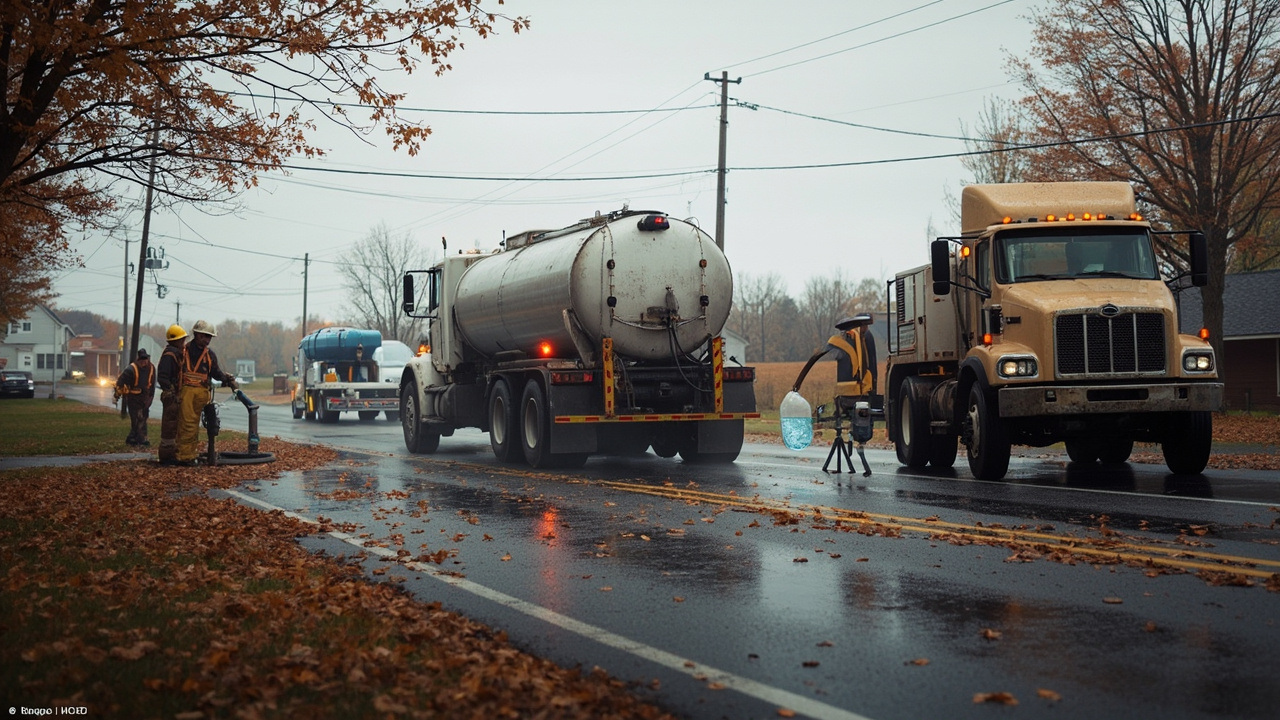
To ease inconvenience, Pennsylvania American Water said it will supply a non-potable water tanker and bottled drinking water at the TA Truck Stop, 875 N Eagle Valley Road, Milesburg, according to the Pennsylvania American Water newsroom notice.
Those resources should be on-site by 2 p.m. on Oct. 5. Customers should bring their own containers when visiting the tanker for water, according to the notice.
The distinction between the two supplies is important for planning. Bottled drinking water is provided for drinking and other ingestion uses described in the boil instruction. The tanker water is identified as non-potable, so it is not a substitute for boiled or bottled water for drinking.
Families should keep the two supplies separate during transport and storage. The notice specifically asks tanker users to bring containers, so households should bring clean containers that can be closed and carried safely.
Keep the source and collection time with any water brought home. A reused bottle filled from an unknown supply is not equivalent to unopened commercial water, and separating food preparation from handling of uncertain water helps prevent containers from being mixed up, a practice emphasized in general water-outage guidance.
How to boil and use water until further notice
The notice states: DO NOT DRINK THE WATER WITHOUT BOILING IT FIRST. That instruction remains in effect until further notice.
The method listed is to bring all water to a rolling boil, let it boil for one minute, and cool before using, or use bottled water. Cool boiled water before drinking or other use to avoid scald injury, and keep children away from the heating and cooling area.
Until further notice, customers should use boiled or bottled water for drinking, making ice, washing dishes, brushing teeth, and food preparation, according to the notice. That list covers every route where water could be swallowed, even in a small amount.
Do not use water or ice from appliances connected to the water line, such as a refrigerator dispenser, during the advisory period. The Why Now Daily summary of CDC guidance states that water should still be boiled after passing through a household pitcher or filter unless officials say otherwise, and that ice made after the advisory may have affected the supply should be discarded while ice makers connected to the line are stopped.
The same CDC-summary guidance notes that food-preparation surfaces and dishes should follow local sanitation instructions, which may vary with dishwasher temperature. For Boggs Township customers, the controlling instruction is the utility list: boiled or bottled water for drinking, ice, dishes, brushing teeth, and food preparation.
Infant feeding requires extra care during any boil advisory. The CDC-summary guide recommends breastfeeding when possible and ready-to-use formula when available, and notes that powdered formula is not sterile, so caregivers should follow local public-health guidance and contact the child's clinician when safe water or ready-to-use formula is unavailable.
Bathing and showering rules can vary by advisory. The CDC-summary guide notes that bathing may be allowed during many boil advisories if no water is swallowed, but young children are more likely to ingest bath water and may need a sponge bath with safe water. People with open wounds, weakened immunity or specific medical devices should follow instructions from health authorities and their clinicians, according to that guide.
Boiling addresses germs. It does not remove harmful chemical contamination or make a do-not-use supply acceptable, a limitation explained in both emergency purification references and the CDC-summary guide. If water smells of fuel or chemicals, general federal guidance says not to treat it and to use stored or bottled water while asking the utility or health department, rather than applying boil advice.
What the utility will do before lifting the advisory
State regulations require the advisory whenever contamination-allowing conditions exist, and the company said it will collect and analyze additional water quality samples, including bacterial samples.
The notice states that the company will inform customers when corrective actions have been completed and they no longer need to boil water. Customers should wait for that direct update rather than assuming service restoration alone means tap water is safe.
For more information, the notice directs customers to visit pennsylvaniaamwater.com/alerts or contact Pennsylvania American Water's Customer Service Center at 800-565-7292. The customer service center is the contact for questions about the advisory boundary, tanker availability, and sampling updates.
Customers are encouraged to save the utility notice and use its end-of-advisory checklist when it is issued, because pipe length, building systems and the original contamination event affect the proper return to service. That return checklist practice is described in the CDC-summary guide for the period after officials lift an advisory.
Until that lift message arrives, keep a clear notice at affected taps, tell every household member and visitor about the restriction, and reserve confirmed drinking-quality water for drinking, medications, formula, food and pets. Record the affected area, time, exact restrictions, and where updates will appear so the household does not rely on memory.
Sources referenced
- Pennsylvania American Water newsroom - A boil water advisory has been issued for customers in portions of Pennsylvania American Water's Centre County service area (Oct. 5, 2026) (https://newsroom.amwater.com/2026-10-05-A-boil-water-advisory-has-been-issued-for-customers-in-portions-of-Pennsylvania-American-Waters-Centre-County-service-area)
- Why Now Daily - Boil Water Advisory: What You Can Drink, Cook With and Wash With (CDC guidance summary) (https://whynowdaily.com/guides/boil-water-advisory-what-to-do.html)